
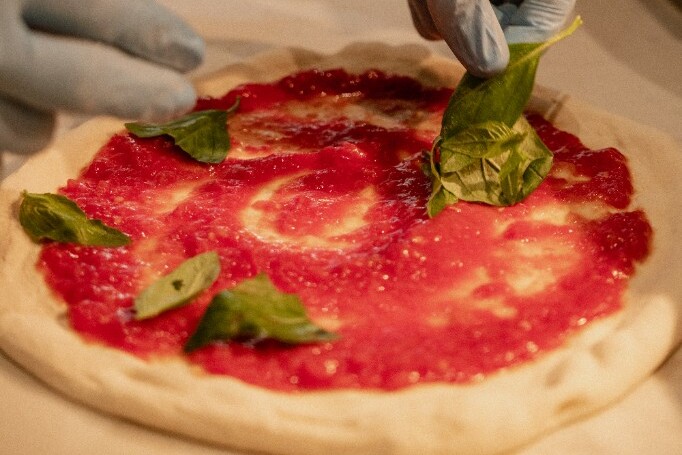
San Marzano tomatoes are a long, plum variety of tomato grown in the volcanic soil around Mount Vesuvius, near Naples. They’re sweeter, less acidic and less seedy than standard tomatoes, which is exactly why Neapolitan pizzerias (ours included!) use them for pizza sauce.
They’re one of the Neapolitan essentials, alongside fior di latte, hand-stretched dough and a bake of around 60 to 90 seconds. So if you’ve ever wondered why the sauce on a proper Neapolitan pizza tastes so much brighter than the ones on a supermarket shelf, the tomato is a big part of the answer. Here’s the full story, as part of our wider Neapolitan pizza guide.
What are San Marzano tomatoes?
San Marzano tomatoes are a type of plum tomato, longer and more pointed than the round ones you’d pick up at the greengrocer. They take their name from the town of San Marzano sul Sarno, just outside Naples.
Open a tin and you’ll notice the difference straight away. The flesh is thick and meaty, there are fewer seeds, and the skin is thin enough to slip off easily. That’s why you’ll mostly find them sold whole and peeled in tins, rather than fresh.
In other words, they’re built for sauce. Less water, less faff, more flavour.
Where do San Marzano tomatoes grow?
San Marzano tomatoes grow on the plains of Campania, the region around Naples, in the shadow of Mount Vesuvius. The soil there is rich in volcanic ash from centuries of eruptions, and it’s this soil that gives the tomatoes their unique flavour.
Genuine San Marzano tomatoes grown in their designated area are protected in the EU, and you’ll see a DOP label on the tin. “San Marzano-style” tomatoes grown elsewhere can still be decent, but they’re not quite the same thing. If you want the real deal, it’s always worth checking the label.
Why do Neapolitan pizzerias use San Marzano tomatoes?
It comes down to three things: sweetness, low acidity and fewer seeds.
Sweetness. San Marzano tomatoes are naturally sweet, so the sauce tastes rich and rounded without needing any added sugar.
Low acidity. Standard tomatoes can have a sharp, tangy edge. San Marzanos are much gentler, which means the sauce sits happily alongside creamy fior di latte instead of fighting it.
Fewer seeds. Seeds can add bitterness and extra water. Fewer of them means a cleaner flavour and a sauce that won’t make your base soggy.
That last point matters more than you’d think. A Neapolitan pizza cooks in 60 to 90 seconds at around 450°C, so there’s no time for a watery sauce to reduce in the oven. Thick, meaty tomatoes are the difference between a soft, tender centre and a soggy one.
San Marzano vs standard tinned tomatoes
Here’s how San Marzanos stack up against the standard tins you’ll find on most supermarket shelves.
| San Marzano tomatoes | Standard tinned tomatoes | |
|---|---|---|
| Shape | Long, pointed plum | Usually round or shorter plum |
| Flavour | Sweet and rich | Often sharper and more tangy |
| Acidity | Low | Higher |
| Seeds | Fewer | More |
| Flesh | Thick and meaty | Softer and more watery |
| Where grown | Volcanic plains near Naples | Varies widely |
| Best for | Pizza sauce, quick sauces | Long-simmered sauces, stews |
Standard tinned tomatoes aren’t bad, by the way. They’re great in a slow-cooked ragu where hours on the hob soften the edges. On a pizza that cooks in about a minute, though, there’s nowhere to hide.
Why is Neapolitan pizza sauce uncooked?
In our restaurants, the San Marzano tomatoes go on uncooked. No simmering, no reducing, no fancy sauce recipe. The wood-fired oven does all the cooking in seconds.
Cooking the sauce first and then baking it again would dull the flavour and turn it heavy and jammy. Going on raw keeps it bright, fresh and properly tomatoey, which is just what you want against a soft base and melting cheese.
Our WFS Finish At Home pizzas work slightly differently. They’re part-cooked in our wood-fired ovens before they’re chilled and sent out, so the sauce has already had its first blast of heat by the time it reaches you. It’s wood-fired by us, finished by you: a few minutes in your oven and it’s ready for you to tuck in.
How can you taste the difference?
The simplest test is a Margherita. With so few ingredients, there’s nothing for the tomato to hide behind, which is why it’s the pizza every Neapolitan pizzeria is judged on. Our guide to what makes a pizza Neapolitan explains why.
Our WFS Finish at Home Margherita keeps it simple: San Marzano tomatoes, fior di latte and Grana Padano. The sweet, low-acid sauce and creamy cheese are a match made in Naples, and you can find out more about that pairing in our guide to Italian pizza cheeses.
There’s no minimum order and it’s freezer-friendly, so you can stock up and keep one in for a lazy Friday night.
Taste the difference in our Margherita.
San Marzano tomato FAQs
What are San Marzano tomatoes?
San Marzano tomatoes are a long, plum variety of tomato grown in the volcanic soil near Mount Vesuvius in southern Italy. They’re sweet, low in acidity and have fewer seeds than standard tomatoes, making them ideal for pizza sauce.
What’s the difference between San Marzano and regular tomatoes?
San Marzano tomatoes are sweeter, less acidic and less seedy than regular tomatoes, with thicker, meatier flesh. This makes a richer, less watery sauce, which is ideal for Neapolitan pizza.
Why are San Marzano tomatoes usually sold in tins?
San Marzano tomatoes are mostly sold whole and peeled in tins because their thin skins and meaty flesh make them perfect for preserving. Fresh San Marzanos are rarely found outside Italy.
Is Neapolitan pizza sauce cooked?
A traditional Neapolitan pizza sauce goes on uncooked and is cooked by the heat of the oven. At Wood Fire Smoke’s restaurants, uncooked San Marzano tomatoes are cooked in the wood-fired oven in around 60 to 90 seconds.
Can you get a pizza with San Marzano tomatoes delivered?
Yes! Our WFS Finish At Home Margherita is made with San Marzano tomatoes, fior di latte and Grana Padano. They’re then part-cooked in a wood-fired oven, delivered chilled by DPD across mainland UK and finished in your home oven in a few minutes.